
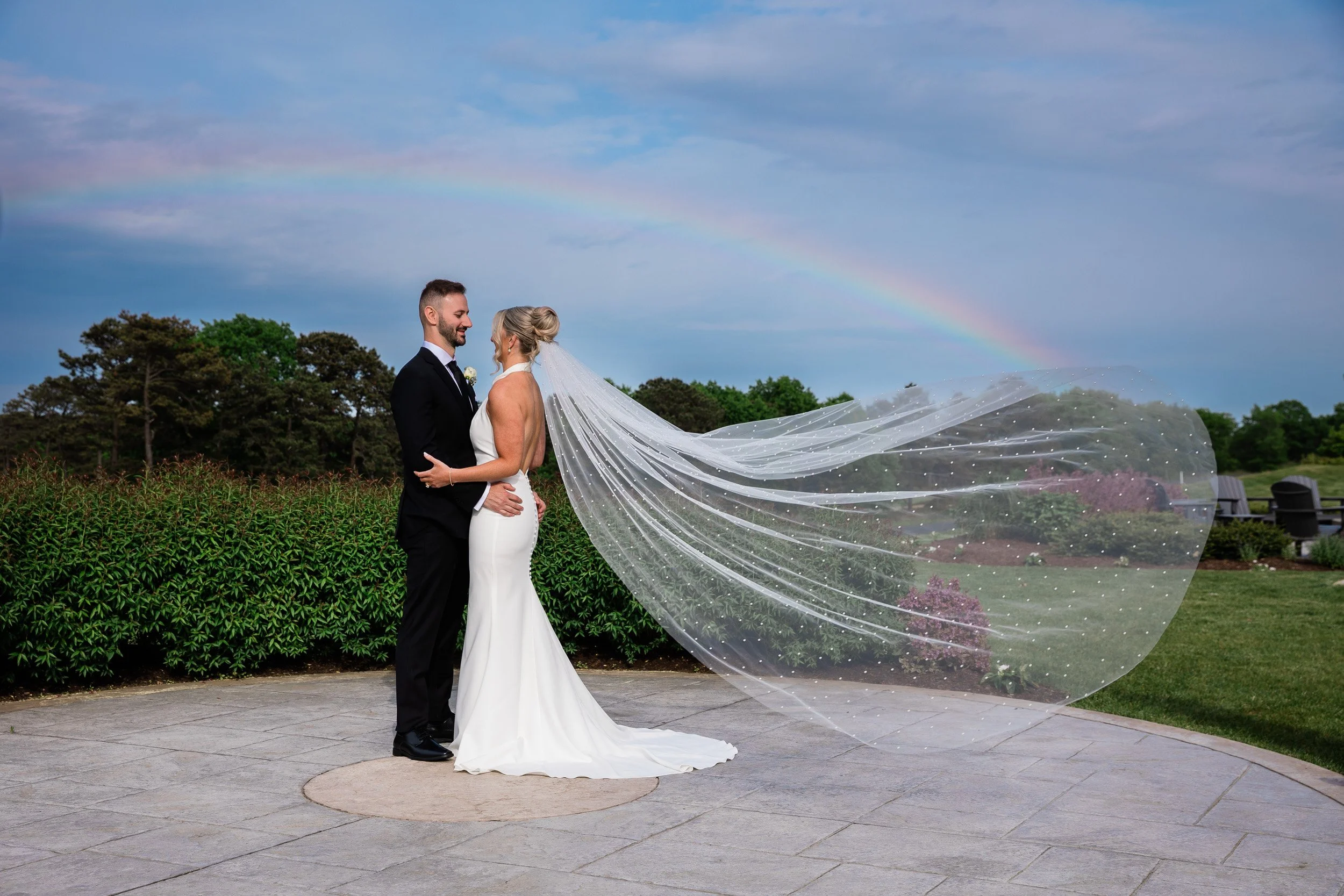
You've probably noticed by now that "wedding photographer" means a lot of different things depending on who you're talking to. Some are solo operators who shoot every wedding themselves. Some are large companies with a roster of photographers available on any given weekend. And some — like us — fall somewhere in the middle: a boutique studio with a lead photographer and a carefully vetted associate team.
The difference matters more than most brides realize when they're first putting together their vendor list. This post breaks down what those differences actually mean for your wedding day — and gives you a list of questions worth asking before you sign any contract.
How Large Photography Companies Work
Large photography studios — the kind that might have a dozen or more photographers on staff — operate on volume. They take a lot of bookings, they have photographers available on most dates, and their pricing is often lower than what you'd pay a boutique studio or an independent photographer with years of experience behind them.
There's nothing inherently wrong with that model. If a company is profitable and their clients are happy, that's a legitimate business. But there are a few things worth understanding before you book one.
The most common issue isn't bad photography — it's a disconnect between what you see when you inquire and who actually shows up on your wedding day. In a high-volume operation, the portfolio you're shown may belong to the studio's most experienced photographer. The person assigned to your wedding might be someone entirely different, with a different experience level, a different shooting style, and no prior relationship with you or your venue.
I started my career as an associate shooter for another photographer. I was reasonably competent early on, and the photos were fine — but the portfolio his clients were shown to book me wasn't mine. It was his. That always bothered me, because it put clients in a position of trusting work that wasn't a real representation of what they were getting. I've heard worse versions of that story from photographers who've been in this industry longer than I have. The misrepresentation isn't always intentional, but the result is the same: a bride who expected one thing and received another.
The question to ask isn't whether a studio model is good or bad. It's whether the studio you're considering is being transparent with you about exactly who will be photographing your wedding and what their work actually looks like.
What You're Actually Getting
When you book an independent photographer — someone who shoots every wedding themselves — you're booking a specific person, a specific body of work, and a specific set of relationships built up over years in the same market.
For us, that means 17 years and 280+ weddings in southeastern Massachusetts and greater Boston. It means knowing Lakeview Pavilion, Red Lion Inn, and Tiffany Ballroom well enough that when something goes sideways — and something always goes sideways — we already know how to work with the venue to fix it without blowing up the day.
Here's a real example. We were shooting a daytime wedding — 12 PM ceremony. The father of the bride was responsible for bringing the rings. He forgot them. What should have been a 15-minute delay turned into a 40-minute one by the time a round trip was made to retrieve them. The ceremony started late. When we looked to the venue coordinator and asked if we'd be extending cocktail hour to make up the time, she looked back at us and said: "No. You're going to make up the time."
We did. All the formals, all the bridal party portraits, bride and groom portraits — done in 15 minutes flat. Not rushed-and-sacrificed. Done. That's not a skill you develop in your second or third year shooting weddings. That's pattern recognition from hundreds of days exactly like that one.
We tell couples on every consultation call: if you give us two hours, we'll use two hours. If we have 15 minutes, we'll get it done in 15 minutes. That's not bravado — it's just what 17 years looks like in practice.
Beyond the technical ability to handle a compressed timeline, what an experienced independent photographer brings is harder to quantify. It's reading a room. Knowing when a couple has had enough posing and needs to just be left alone for a few minutes. Knowing the groom is camera-shy and adjusting accordingly within the first five minutes. Moving through a family formal list efficiently enough that nobody feels like they're being herded but fast enough that it doesn't eat the entire cocktail hour. Those things don't appear in a portfolio — you see them in reviews, and you feel them on the day.
A Third Option Worth Understanding
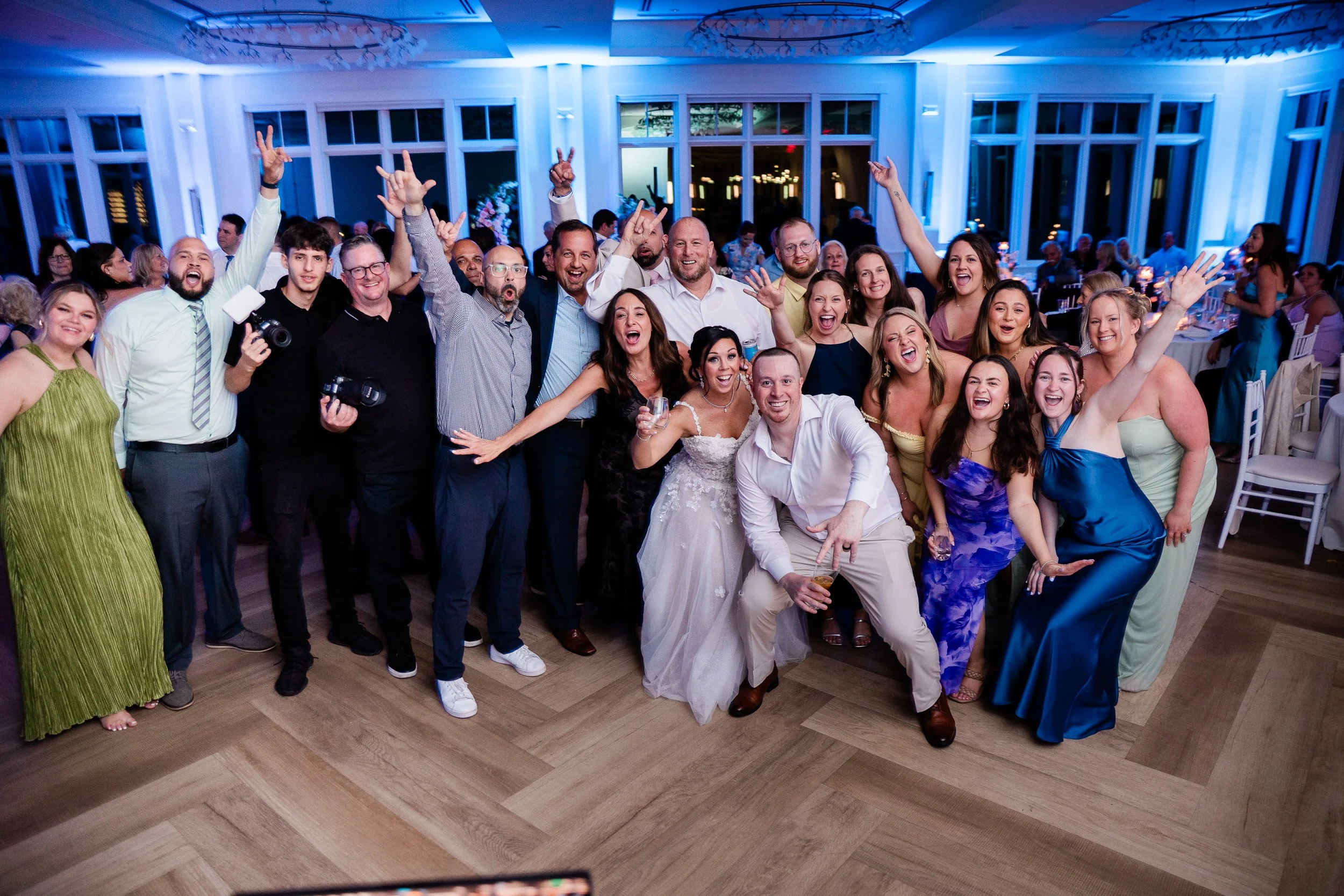
There's a third model that doesn't get talked about enough: the boutique studio with a small, handpicked associate team. It sits between the solo independent photographer and the high-volume company, and when it's done right, it offers something neither of the other two can.
Here's how we approach it at Anthony Niccoli Photography. Every associate photographer we've considered has spent significant time working alongside us as a second shooter — which means we've seen their work directly, on actual wedding days, in the same conditions, at the same venues. The standard isn't "are they good?" It's "do their photos stand up next to ours? Do they find angles we missed? Do they use the light as well or better? Can we edit their photos in a way that makes them seamless with our own?"
Personality matters just as much as technical ability. If clients don't respond to them the way they respond to us, the fit isn't right regardless of how talented they are. We're not filling a roster. We're extending a standard.
What that means for you as a couple booking a studio collection: you get a photographer whose work we can vouch for firsthand — not because they passed an interview, but because we've watched them work. Their portfolio on our site is their own work — not ours. You can see Emily's portfolio here before you ever reach out.
We'd rather shoot 30 weddings a year with a standard we're proud of than book 60 and dilute what the studio means. Associate collections exist because there's genuine demand we want to serve well — not because we want more volume for its own sake.
Questions Worth Asking Any Photography Studio
Whether you're talking to us or anyone else, these are the questions that reveal whether a studio is being transparent with you — and whether the experience matches what's on their website.
Have Questions? We're Happy to Answer All of Them.
We believe an informed bride makes a better booking decision — for everyone. If you have questions about how our studio works, who our photographers are, or what's included in each collection, we'd love to talk through it with you. No pressure, no pitch — just a conversation.